
Procedure guide
Calf Muscle Reduction in Korea
- Surgery time Around 0.5 – 1 hour
- Anesthesia type Local anesthesia with sleeping sedation
- Hospitalization Not required
- Face wash & makeup Same day
- Post-surgery check-up 1 time (depending on the patient's condition)
- Stitches removal Not required



Calf muscle reduction is a specialised procedure designed to slim the lower leg by reducing the bulk of the gastrocnemius muscle. It is one of the most commonly requested body-contouring surgeries among patients visiting Korea, where surgeons have refined multiple techniques — including selective neurectomy (nerve block), radiofrequency ablation, and partial muscle resection — over tens of thousands of cases.
Korea's popularity for this procedure stems from high patient demand domestically, which has given surgeons unmatched volume and technical refinement. International patients benefit from this depth of experience, combined with transparent pricing and modern clinic infrastructure.
| Surgery time | 30 – 60 minutes |
| Anaesthesia | Local with sedation, or general |
| Hospital stay | Day-surgery (outpatient) |
| Back to routine | 3 – 5 days (light activity) |
| Final result | 3 – 6 months |
This page is for general information only and does not replace a medical consultation. Individual outcomes vary depending on anatomy, technique chosen, and adherence to aftercare instructions.
How it works
The exact approach is chosen after an in-person assessment of your calf shape, muscle bulk, and aesthetic goals. Below is the general sequence for the most common techniques.
- Planning & marking — The surgeon examines the calves while you stand and flexes the muscle to identify the medial and, if needed, lateral heads of the gastrocnemius. Markings are drawn to guide incision or injection sites.
- Anaesthesia — Local anaesthesia with IV sedation is most common; general anaesthesia may be used for combined procedures. The area is numbed thoroughly before any incision.
- Nerve identification (neurectomy method) — Through a small incision in the popliteal crease (behind the knee), the surgeon isolates the motor nerve branches supplying the targeted muscle heads. These nerves are selectively divided, causing the muscle to gradually atrophy over the following months.
- Muscle resection (direct method) — If a more immediate reduction is desired, a portion of the inner gastrocnemius muscle belly is excised through a short incision behind the knee. This provides a faster visible change but involves a slightly longer recovery.
- Closure & compression — Incisions are closed with fine sutures and dressed. Compression bandages or stockings are applied to minimise swelling and support healing.
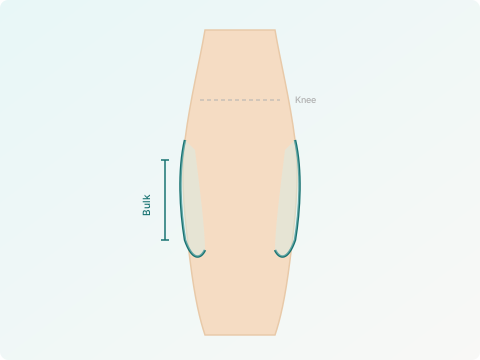
Calf assessment
The surgeon evaluates the gastrocnemius muscle bulk by having the patient stand on tiptoe. The medial and lateral heads are assessed to identify the dominant contributor.
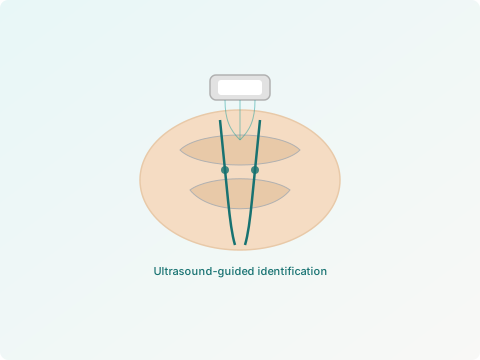
Nerve identification
Using ultrasound guidance or anatomical landmarks, the motor nerve branches supplying the targeted gastrocnemius muscle heads are precisely identified.
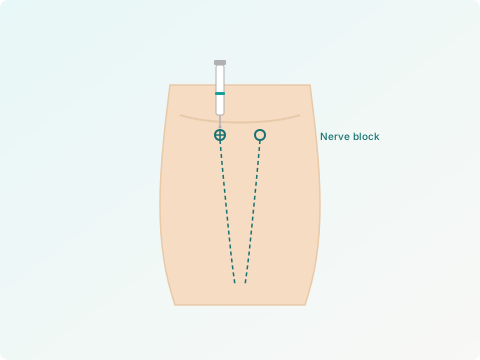
Selective nerve block
The selected motor nerve branches are blocked or ablated through a small incision behind the knee, causing targeted muscle atrophy without affecting walking function.
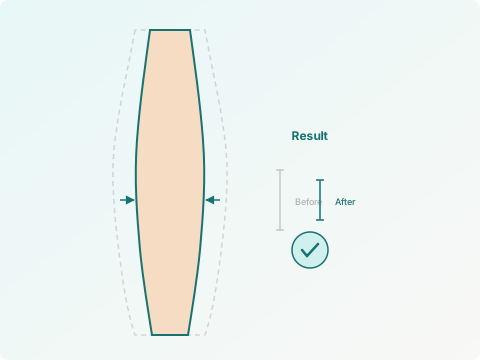
Gradual slimming
The muscle gradually reduces in size over 3-6 months as the denervated fibers atrophy. Walking and daily activities remain unaffected throughout recovery.
Cost · as of 2026
Through Seoul Medical Insider, calf muscle reduction pricing is presented with no hidden markup. The quote you receive covers the surgeon's fee, anaesthesia, facility use, and standard aftercare visits, so there are no surprise charges on the day of surgery.
The final price depends on the technique used (neurectomy vs. resection vs. radiofrequency), whether one or both muscle heads are treated, and whether additional liposuction of surrounding calf fat is included. Neurectomy-only procedures are generally the least expensive option, while combined resection with liposuction sits at the higher end of the range.
Pricing information is reviewed and updated as of 2026. Please request a personalised quote through Seoul Medical Insider for current figures based on your consultation findings.
Who it is for
Calf muscle reduction can make a meaningful difference for the right candidate, but it is not suitable for everyone. A thorough consultation determines which category you fall into.
- Suited: Individuals whose calf bulk is primarily muscular rather than fatty, and who have been unable to slim their calves through exercise modification or weight management.
- Suited: Patients with a noticeable asymmetry in calf size due to muscular overdevelopment on one side.
- Suited: People who experience self-consciousness about calf size that affects clothing choices and daily comfort.
- Discuss carefully: Patients whose calf volume is mainly subcutaneous fat — liposuction alone may be more appropriate.
- Discuss carefully: Athletes or individuals who rely on explosive lower-leg power (sprinters, dancers) — reducing the gastrocnemius will diminish push-off strength.
- Discuss carefully: Patients with peripheral vascular disease, deep-vein thrombosis history, or significant lymphoedema in the lower legs.
Recovery
- Week 1: Moderate soreness and swelling behind the knee and through the calf. Walking is possible from day one but should be limited to short distances. Compression stockings are worn continuously. Keeping the legs elevated when resting helps control swelling.
- Weeks 2 – 3: Swelling begins to subside. Most patients can return to desk work and light daily activities. Sutures are removed around day 7 – 10. You may notice the calf feels slightly weaker on stairs; this is normal and temporary as the soleus muscle compensates.
- Weeks 4 – 8: Visible slimming becomes more apparent, particularly with the resection method. With neurectomy, atrophy is still progressing. Light exercise such as walking and swimming can resume. Avoid heavy calf-loading exercises (running, jumping) until cleared.
- Months 3 – 6: The final contour emerges. Neurectomy patients see the most change during this window as the muscle continues to reduce in volume. Strength adaptation is largely complete, and most patients report no functional limitation in everyday activities.
Plan to stay in Korea for at least 5 – 7 days after the procedure so your surgeon can monitor early healing, remove sutures if needed, and address any concerns before you fly home. Compression stockings should be worn during the return flight to reduce the risk of deep-vein thrombosis.
Risks & considerations
Calf muscle reduction is generally safe when performed by an experienced surgeon, but all procedures carry risks. Possible complications include asymmetric reduction if the two legs respond differently to neurectomy, temporary or prolonged numbness around the incision site behind the knee, calf cramping during the adaptation period, haematoma or seroma requiring drainage, infection at the incision site, visible scarring in the popliteal crease, incomplete reduction requiring a revision procedure, and — rarely — deep-vein thrombosis associated with reduced lower-leg mobility during early recovery. A small number of patients report persistent weakness when climbing stairs or running, though the soleus muscle typically compensates within several months.
Korea trip checklist
- Bring or purchase knee-high compression stockings (20 – 30 mmHg) — your clinic may provide them, but confirm in advance.
- Pack loose-fitting trousers or long skirts that accommodate post-operative bandaging and swelling.
- Arrange accommodation within a short taxi ride of the clinic for the first 3 – 5 days; avoid locations that require long walks or many stairs.
- Stop blood-thinning medications and supplements (aspirin, fish oil, vitamin E, ginkgo) at least 7 days before surgery, as directed by your surgeon.
- Download a translation app — while clinic coordinators speak English, pharmacy staff and taxi drivers may not.
- Confirm your return flight allows for at least 5 – 7 days of recovery in Korea; book an aisle seat so you can move your legs during the flight.
- Ask your clinic for a medical certificate and operative summary in English to share with your doctor at home.
Clinical details are summarized from materials provided by SMI's partner clinics and published guidance from the Korean Society of Plastic and Reconstructive Surgeons (KSPRS). Technique selection is determined by your surgeon during consultation. SMI is a registered patient-facilitation agency, not a medical provider, and does not offer medical advice.
Why get this procedure in Korea
-
Advanced body sculpting
Korean clinics use the latest liposuction and fat grafting technologies, with surgeons trained in precise body contouring techniques.
-
Accredited surgical centres
All procedures are performed in KOIHA-accredited or JCI-certified hospitals with full anaesthesia and recovery monitoring.
-
All-inclusive packages
Many clinics offer international patient packages covering surgery, hospital stay, compression garments, and post-op care.
You may also consider
Related guides
- Liposuction and Body Contouring in Korea: A Comprehensive Guide for International Patients Korea has become a leading destination for liposuction and body contouring, offering advanced techniques at competitive prices. This guide covers what international patients need to know about procedures, costs, recovery, and clinic safety.
- How Long Should You Stay in Korea After Plastic Surgery? A logistics hub for international patients — typical recovery-stay windows by procedure, when you can safely fly home, and the visa and interpreter basics for a trip to Seoul.
- The Real All-In Cost of Plastic Surgery in Korea (Beyond the Quote) The surgery quote is only part of the bill. A clear, honest framework for the all-in cost of plastic surgery in Korea — every line item, plus how to avoid hidden fees and the foreigner price gap.
Frequently asked questions
Sources
- Ministry of Health and Welfare, Republic of Korea
- Medical Korea (KHIDI)
- Korea Health Industry Development Institute (KHIDI)
- Korean Society of Plastic and Reconstructive Surgeons (KSPRS)
- International Society of Aesthetic Plastic Surgery (ISAPS)
Read our editorial policy to learn how we source and verify information.
