
Procedure guide
One Jaw Surgery in Korea
- Surgery time Around 1 – 2 hours
- Anesthesia type General anesthesia
- Hospitalization 1 – 2 nights
- Face wash & makeup 3 days after surgery
- Post-surgery check-up 2 – 3 times (depending on the patient's condition)
- Stitches removal 14 days after surgery



One jaw surgery — also called single-jaw orthognathic surgery — corrects skeletal irregularities by repositioning either the upper jaw (maxilla) or the lower jaw (mandible), but not both. It is indicated when the misalignment originates primarily in one jaw while the other is in an acceptable position. Common scenarios include a receding lower jaw (mandibular retrognathia), a protruding lower jaw (mandibular prognathism), or a vertically excessive upper jaw causing a gummy smile.
Korea's oral-maxillofacial surgery centres have refined one-jaw procedures through exceptionally high case volumes, integrating computer-assisted surgical simulation, custom cutting guides, and meticulous orthodontic-surgical coordination. For international patients, this translates into predictable outcomes and a well-organised care pathway.
| Surgery time | 1.5 – 3 hours |
|---|---|
| Anaesthesia | General anaesthesia |
| Hospital stay | 1 – 2 nights |
| Back to routine | 2 – 4 weeks |
| Final result | 6 – 12 months |
The information on this page is for educational purposes and does not replace a professional medical consultation. Individual anatomy, health status, and surgical goals vary — always consult a qualified surgeon before making decisions.
How it works
One jaw surgery uses well-established orthognathic osteotomy techniques to move the jaw into a corrected position. The specific technique depends on which jaw is treated: a Le Fort I osteotomy for the upper jaw or a bilateral sagittal split osteotomy (BSSO) for the lower jaw.
- Planning — 3-D CT scans, cephalometric analysis, and dental models are used to simulate the jaw movement digitally. A surgical splint (wafer) is fabricated to guide the new bite position during surgery. Pre-surgical orthodontics may be required for 6 – 12 months to align the teeth so they fit correctly after the jaw is moved.
- Anaesthesia — General anaesthesia with nasotracheal intubation is administered.
- Access — For a Le Fort I (upper jaw), an incision is made inside the mouth above the upper teeth. For a BSSO (lower jaw), incisions are placed along the inner gum behind the lower molars bilaterally.
- Reshaping — Le Fort I: The maxilla is cut horizontally and separated from the skull base. It is repositioned forward, backward, upward, or downward as planned, then secured with titanium plates and screws. BSSO: The mandible is split sagittally on both sides. The tooth-bearing segment is moved forward or backward into the planned occlusion and fixed with titanium plates or bicortical screws.
- Closing — Incisions are sutured with absorbable material. The surgical splint is wired or banded to the teeth temporarily to maintain the new bite. Elastic bands guide jaw movement during early healing.
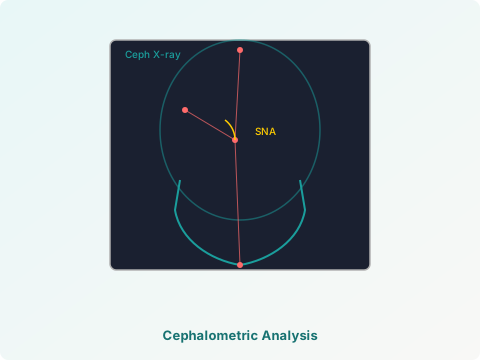
Diagnostic workup
Cephalometric X-rays, 3D CT, and dental models determine which jaw (upper or lower) requires repositioning and the exact movement vector needed.
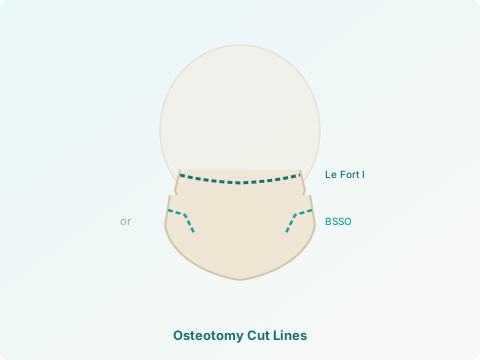
Osteotomy
For the upper jaw, a Le Fort I osteotomy frees the maxilla. For the lower jaw, a bilateral sagittal split osteotomy (BSSO) frees the mandible.
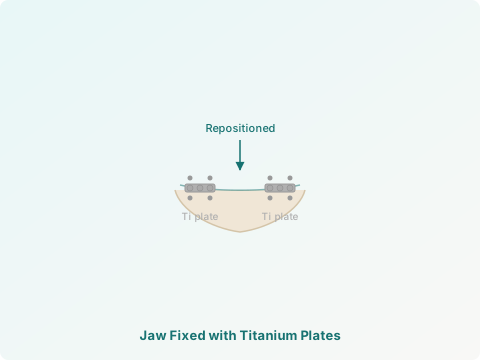
Jaw repositioning
The freed jaw segment is moved to its planned position — advanced, set back, rotated, or shifted laterally — to correct the bite and facial balance.
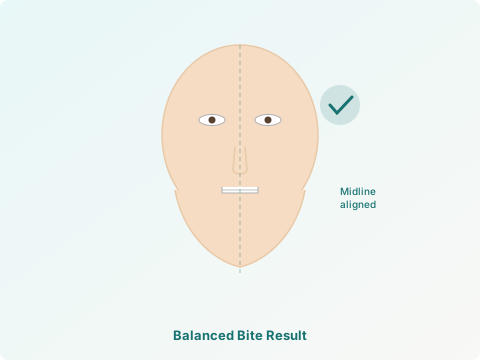
Plate fixation & recovery
Titanium mini-plates and screws lock the jaw in position. A liquid-to-soft diet is maintained for 4-6 weeks while the bone heals and consolidates.
Cost · as of 2026
Seoul Medical Insider ensures transparent pricing with no intermediary mark-ups. You receive the clinic's direct fee schedule and a clear explanation of what is included — surgical fee, anaesthesia, hospital stay, and standard follow-up visits.
One jaw surgery in Korea typically ranges from KRW 6,000,000 to KRW 12,000,000 (approximately USD 4,500 – 9,000). Cost varies depending on whether the upper or lower jaw is treated, the complexity of the movement (simple advancement versus multi-directional repositioning), and whether custom surgical guides are used. Pre-surgical orthodontics, if performed in Korea, is an additional cost; many international patients complete this phase at home to save time.
All pricing information is reviewed and updated as of 2026. Request a personalised quote through Seoul Medical Insider for exact figures based on your clinical situation.
Who it is for
One jaw surgery is appropriate when the skeletal problem is localised to a single jaw and the opposing jaw is in a normal or near-normal position relative to the skull base.
- Suited: Patients with mandibular prognathism (protruding lower jaw) creating an underbite, where the upper jaw position is normal.
- Suited: Patients with mandibular retrognathia (receding lower jaw) resulting in a severe overbite and a weak chin profile.
- Suited: Individuals with vertical maxillary excess (long upper jaw) causing excessive gum display when smiling.
- Suited: Adults who have completed jaw growth (typically 18+ for females, 20+ for males) and have completed or are willing to undergo pre-surgical orthodontics.
- Discuss carefully: Patients whose malocclusion involves both jaws — two-jaw surgery may deliver a more stable and balanced result.
- Discuss carefully: Those with obstructive sleep apnoea caused by jaw position — a single-jaw procedure may not open the airway sufficiently.
- Discuss carefully: Patients with cleft palate or craniofacial syndromes, who may require a more complex multidisciplinary approach.
Recovery
- Week 1 — Significant facial swelling, particularly around the operated jaw. Elastic bands limit jaw opening; diet is strictly liquid (syringed or through a straw). Nasal congestion is common after upper-jaw surgery. Pain and discomfort are managed with medication. Numbness of the lower lip (after BSSO) or upper lip (after Le Fort I) is expected.
- Weeks 2 – 3 — Swelling gradually reduces. Elastic bands are adjusted to allow gentle jaw movement. Patients transition from liquids to blended or very soft foods. Light walking is encouraged; strenuous activity is not.
- Weeks 4 – 8 — Soft-food diet continues; most patients can eat soft solids by week 6. Elastics are reduced or removed. Post-surgical orthodontic adjustments may begin. Moderate exercise is permitted from week 6.
- Months 3 – 12 — Bone healing consolidates fully by 3 – 4 months. Nerve sensation progressively returns over 6 – 12 months, though some patients report minor residual numbness. The final bite, facial profile, and soft-tissue drape stabilise during this period.
International patients should stay in Korea for a minimum of 10 – 14 days. The surgical team will need to verify bone position with imaging, adjust elastics, and ensure the bite is tracking correctly before clearing you for travel.
Risks & considerations
One jaw surgery is a well-established orthognathic procedure, but it carries risks inherent to bone surgery near critical structures. Key risks include temporary or, less commonly, permanent numbness of the lower lip and chin (inferior alveolar nerve injury in BSSO) or the upper lip and palate (infraorbital nerve in Le Fort I); unfavourable splits during BSSO (a "bad split") requiring additional fixation; post-operative malocclusion or relapse if bone healing or orthodontic compliance is suboptimal; infection at the osteotomy site or around hardware; TMJ (temporomandibular joint) pain or dysfunction, especially if the condyle is displaced during mandibular surgery; haemorrhage from the maxillary artery or pterygoid venous plexus during Le Fort I surgery; nasal septum deviation or breathing changes after upper-jaw repositioning; and delayed bone union, particularly in smokers or patients with poor nutrition. Thorough virtual surgical planning and experienced surgical execution are the most effective ways to mitigate these complications.
Korea trip checklist
- Complete pre-surgical orthodontics before travelling to Korea — coordinate with your home orthodontist and the Korean surgical team to ensure the teeth are in the correct pre-surgical position.
- Bring a complete set of records: 3-D CT, cephalometric X-ray, dental models or intraoral scans, and orthodontic treatment notes.
- Stop smoking at least 4 weeks before surgery — nicotine significantly impairs bone healing and increases infection risk.
- Prepare a liquid-diet kit: syringes (for directing fluids into the mouth), protein shakes, electrolyte solutions, and a portable blender.
- Pack nasal saline spray and a humidifier if having upper-jaw surgery — nasal congestion is common for the first week.
- Plan to stay in Seoul for 10 – 14 days for follow-up imaging, elastic-band adjustments, and surgeon clearance.
- Arrange for post-surgical orthodontic follow-up at home within 2 – 4 weeks of returning; the Korean surgeon will provide detailed instructions for your home orthodontist.
Clinical details are summarized from materials provided by SMI's partner clinics and published guidance from the Korean Society of Plastic and Reconstructive Surgeons (KSPRS). Technique selection is determined by your surgeon during consultation. SMI is a registered patient-facilitation agency, not a medical provider, and does not offer medical advice.
Why get this procedure in Korea
-
World-leading surgical volume
Korean plastic surgeons perform more facial procedures per capita than any other country, refining techniques through high case volumes.
-
Board-certified specialists
All SMI partner surgeons hold Korean Board of Plastic Surgery certification and operate at JCI or KOIHA-accredited facilities.
-
40-60% cost savings
Comparable or superior results at a fraction of US/EU pricing, with no compromise on safety standards or technology.
You may also consider
Related guides
- Two-Jaw Surgery in Korea: What International Patients Need to Know Two-jaw surgery corrects functional and aesthetic jaw misalignment by repositioning both the upper and lower jaw. Korea has become a leading destination for this complex procedure — here's what international patients should know before committing.
- Is Plastic Surgery in Korea Safe? A Patient's Guide to Avoiding Ghost Surgery A balanced look at safety in Korea's plastic surgery industry — what ghost surgery is, the laws that protect you, and the checks every international patient should make before booking.
- How Long Should You Stay in Korea After Plastic Surgery? A logistics hub for international patients — typical recovery-stay windows by procedure, when you can safely fly home, and the visa and interpreter basics for a trip to Seoul.
- Korea Ended the Cosmetic-Surgery VAT Refund in 2026: Is It Still Cheaper? Korea ended its VAT refund for foreign cosmetic-surgery patients on January 1, 2026. What the change really means for your bill — and an honest look at how Korea now compares with Singapore and the US.
Frequently asked questions
Sources
- Ministry of Health and Welfare, Republic of Korea
- Medical Korea (KHIDI)
- Korea Health Industry Development Institute (KHIDI)
- Korean Society of Plastic and Reconstructive Surgeons (KSPRS)
- International Society of Aesthetic Plastic Surgery (ISAPS)
Read our editorial policy to learn how we source and verify information.
