
Procedure guide
Tummy Tuck (Abdominoplasty) in Korea
- Surgery time Around 2 – 4 hours
- Anesthesia type General anesthesia
- Hospitalization 1 – 2 nights
- Face wash & makeup 3 days after surgery with waterproof bandages
- Post-surgery check-up 2 – 3 times (depending on the patient's condition)
- Stitches removal 10 – 14 days after surgery



A tummy tuck — medically known as abdominoplasty — removes excess skin and fat from the abdomen while tightening the underlying muscle wall. It is one of the most transformative body-contouring procedures available, particularly for patients who have loose abdominal skin after significant weight loss, pregnancy, or ageing that cannot be improved through diet and exercise alone.
Korean plastic-surgery centres perform a high volume of abdominoplasty procedures, offering both full and mini variations. Board-certified surgeons in Seoul combine precise muscle-repair technique (plication of the rectus diastasis) with meticulous scar placement along the bikini line, and many clinics include drain-free protocols and enhanced-recovery pathways that shorten hospital stays.
| Surgery time | 2 – 4 hours |
| Anaesthesia | General anaesthesia |
| Hospital stay | 1 – 2 nights |
| Back to routine | 2 – 3 weeks (desk work); 6 weeks (full activity) |
| Final result | 6 – 12 months |
This page is for general information only and does not replace a medical consultation. Individual results depend on skin quality, body composition, surgical technique, and adherence to post-operative instructions.
How it works
The scope of an abdominoplasty is tailored to each patient. A full tummy tuck addresses the entire abdomen from the pubic area to the ribcage, while a mini tummy tuck targets only the area below the navel. Here is the general sequence for a full abdominoplasty.
- Planning & marking — While you stand, the surgeon marks the lower abdominal incision line (designed to sit within the bikini line), the extent of skin to be removed, and areas where liposuction may be added to refine the waistline.
- Anaesthesia — General anaesthesia is administered, and the patient is positioned supine. A urinary catheter and sequential compression devices are placed for safety during the longer operating time.
- Access & skin elevation — A horizontal incision is made low across the abdomen, from hip to hip. The skin and fat layer is carefully elevated off the muscle wall up to the ribcage, freeing the navel on its stalk.
- Muscle repair (plication) — The separated rectus abdominis muscles are sutured together along the midline with permanent or long-lasting stitches, restoring a firm, flat abdominal wall. This step is especially important for post-pregnancy patients with diastasis recti.
- Skin removal & closing — The skin flap is pulled down, excess tissue is excised, and a new opening is created for the navel. Drains may be placed (though some Korean clinics use progressive tension sutures to avoid drains). The incision is closed in layers, and an abdominal binder is applied.
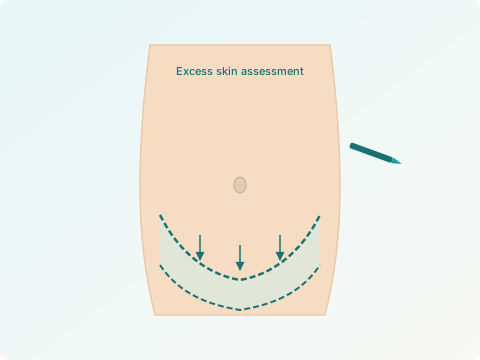
Abdominal assessment
The surgeon evaluates skin excess, diastasis recti (muscle separation), and fat distribution to plan either a mini or full abdominoplasty approach.
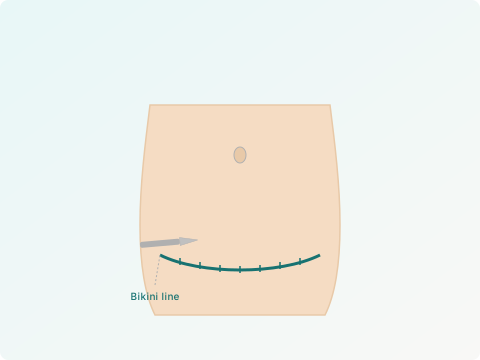
Incision & skin flap elevation
A horizontal incision is made low in the bikini line. The abdominal skin flap is elevated upward to the ribcage, exposing the rectus muscles beneath.
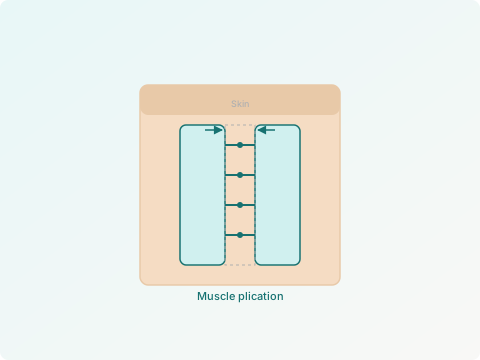
Muscle repair & skin excision
Separated rectus muscles are sutured together at the midline (plication), tightening the abdominal wall. Excess skin and fat are excised, and the navel is repositioned.
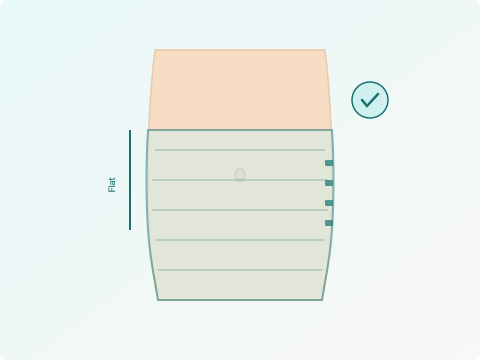
Drain placement & closure
Surgical drains prevent fluid collection. The incision is closed in layers under minimal tension. A compression garment supports healing for 4-6 weeks.
Cost · as of 2026
Through Seoul Medical Insider, abdominoplasty pricing is fully transparent. Your quote includes the surgeon's fee, general anaesthesia, one to two nights of hospital stay, the abdominal compression garment, and scheduled post-operative follow-up visits — no hidden surcharges.
Cost varies depending on whether you need a full or mini tummy tuck, whether muscle repair is required, whether liposuction of the flanks or back is combined, and the overall complexity related to prior surgeries or the amount of excess skin. Combining a tummy tuck with other procedures (such as breast surgery) in a single session can improve overall value but must be medically appropriate.
Pricing information is reviewed and updated as of 2026. Contact Seoul Medical Insider with photos and a brief history for a personalised estimate before your consultation in Seoul.
Who it is for
Abdominoplasty delivers dramatic results, but patient selection is important for both safety and satisfaction.
- Suited: Patients with significant excess abdominal skin and a stable body weight who have finished having children.
- Suited: Post-bariatric patients who have lost a large amount of weight and are left with a hanging skin apron (pannus) that causes hygiene issues or discomfort.
- Suited: Women with rectus diastasis (abdominal muscle separation) after pregnancy that has not resolved with physiotherapy.
- Suited: Individuals with a well-defined lower-abdominal bulge that persists despite being at or near their goal weight.
- Discuss carefully: Patients who plan future pregnancies — pregnancy after a tummy tuck can re-separate the repaired muscles and stretch the skin again.
- Discuss carefully: Smokers, as nicotine significantly increases the risk of skin-flap necrosis and poor wound healing. Most surgeons require cessation at least 4 – 6 weeks before and after surgery.
- Discuss carefully: Patients with a BMI above 30 — weight optimisation before surgery reduces complication rates and improves aesthetic outcomes.
Recovery
- Week 1: This is the most uncomfortable phase. You will walk in a slightly bent posture to avoid tension on the incision. Drains (if placed) are typically removed within 3 – 7 days. Pain is managed with prescribed medication. An abdominal binder must be worn at all times. Short, slow walks around the room are encouraged to prevent blood clots.
- Weeks 2 – 3: Swelling and bruising begin to decrease. Most patients can stand upright by the end of week two. Desk work and light daily activities can resume. Sutures or staples are removed if non-dissolvable. Showering is usually permitted once drains are out and incisions are sealed.
- Weeks 4 – 8: The abdominal binder is worn for a total of 6 weeks. Swelling continues to resolve. Light walking and gentle stretching are beneficial, but avoid core exercises, heavy lifting, and high-impact activity until cleared by your surgeon.
- Months 3 – 12: The scar matures from red or pink to a finer, lighter line. Final contour becomes visible as deep swelling fully resolves, particularly in the lower abdomen. Scar management (silicone sheets or gel) is recommended throughout this period.
Plan to stay in Korea for at least 10 – 14 days after surgery. Your surgeon will need to check wound healing, remove drains, and ensure there are no early complications before clearing you to fly. Long-haul flights shortly after abdominoplasty carry an increased risk of deep-vein thrombosis, so compression garments and in-flight movement are essential.
Risks & considerations
Abdominoplasty is a major surgical procedure performed under general anaesthesia, and risks should be understood before proceeding. Possible complications include seroma (fluid collection under the skin flap, the most common issue), haematoma requiring drainage, wound infection, delayed wound healing or partial wound separation especially at the T-junction points, skin-flap necrosis (higher risk in smokers and patients with diabetes), numbness across the lower abdomen that may persist for months or be permanent, asymmetry or contour irregularities, unfavourable or widened scarring, deep-vein thrombosis or pulmonary embolism (mitigated by early mobilisation and compression devices), and general anaesthesia risks. Revision surgery to address scarring or contour issues is occasionally needed.
Korea trip checklist
- Purchase a high-quality abdominal compression binder before departure — your clinic may provide one, but having a spare is recommended for washing.
- Arrange accommodation with an elevator and a bed (not a floor mattress) — getting up from a low position is very difficult in the first week.
- Pack loose, high-waisted clothing that will not press on the incision line; front-opening tops are easier to put on and remove.
- Stop smoking at least 4 – 6 weeks before surgery and plan to remain smoke-free for at least 4 weeks after to protect wound healing.
- Discontinue blood-thinning medications and supplements (aspirin, ibuprofen, fish oil, vitamin E) at least 7 – 10 days before surgery, as directed.
- Stock up on easy-to-prepare meals and snacks at your accommodation — cooking and grocery shopping will be difficult in the first week.
- Plan at least 10 – 14 days in Korea post-surgery before your return flight; book an aisle seat and wear compression stockings during the flight.
- Request a full operative report and discharge summary in English for your home doctor.
Clinical details are summarized from materials provided by SMI's partner clinics and published guidance from the Korean Society of Plastic and Reconstructive Surgeons (KSPRS). Technique selection is determined by your surgeon during consultation. SMI is a registered patient-facilitation agency, not a medical provider, and does not offer medical advice.
Why get this procedure in Korea
-
Advanced body sculpting
Korean clinics use the latest liposuction and fat grafting technologies, with surgeons trained in precise body contouring techniques.
-
Accredited surgical centres
All procedures are performed in KOIHA-accredited or JCI-certified hospitals with full anaesthesia and recovery monitoring.
-
All-inclusive packages
Many clinics offer international patient packages covering surgery, hospital stay, compression garments, and post-op care.
You may also consider
Related guides
- Liposuction and Body Contouring in Korea: A Comprehensive Guide for International Patients Korea has become a leading destination for liposuction and body contouring, offering advanced techniques at competitive prices. This guide covers what international patients need to know about procedures, costs, recovery, and clinic safety.
- How Long Should You Stay in Korea After Plastic Surgery? A logistics hub for international patients — typical recovery-stay windows by procedure, when you can safely fly home, and the visa and interpreter basics for a trip to Seoul.
- Is Plastic Surgery in Korea Safe? A Patient's Guide to Avoiding Ghost Surgery A balanced look at safety in Korea's plastic surgery industry — what ghost surgery is, the laws that protect you, and the checks every international patient should make before booking.
- The Real All-In Cost of Plastic Surgery in Korea (Beyond the Quote) The surgery quote is only part of the bill. A clear, honest framework for the all-in cost of plastic surgery in Korea — every line item, plus how to avoid hidden fees and the foreigner price gap.
Frequently asked questions
Sources
- Ministry of Health and Welfare, Republic of Korea
- Medical Korea (KHIDI)
- Korea Health Industry Development Institute (KHIDI)
- Korean Society of Plastic and Reconstructive Surgeons (KSPRS)
- International Society of Aesthetic Plastic Surgery (ISAPS)
Read our editorial policy to learn how we source and verify information.
